Brain-Boosting Activities for Seniors


Maintaining brain health is just as important as caring for the body—especially as we age. Cognitive stimulation helps seniors preserve memory, improve focus, and reduce the risk of age-related mental decline. Simple daily activities can make a powerful difference in keeping the mind sharp and engaged. At Elderra Home Care, we encourage seniors and families to incorporate brain-boosting routines into everyday life, all within the comfort and safety of home.
Below are seven effective, easy-to-follow activities that support mental well-being and enhance quality of life for older adults.
Reading and Storytelling
Reading is one of the most accessible and effective ways to stimulate the brain. Whether it’s a newspaper, novel, magazine, or spiritual text, reading strengthens concentration, memory, and comprehension. For seniors, reading aloud can further enhance verbal skills and cognitive processing.
Storytelling is equally powerful. Encouraging seniors to share life stories or memories engages long-term memory and emotional connections. At Elderra Home Care, caregivers often engage seniors in meaningful conversations, helping them recall past experiences that keep the brain active and engaged.

Puzzles and Brain Games
Puzzles are excellent tools for daily cognitive exercise. Activities such as crossword puzzles, Sudoku, jigsaw puzzles, word searches, and memory games stimulate problem-solving skills and improve mental agility.
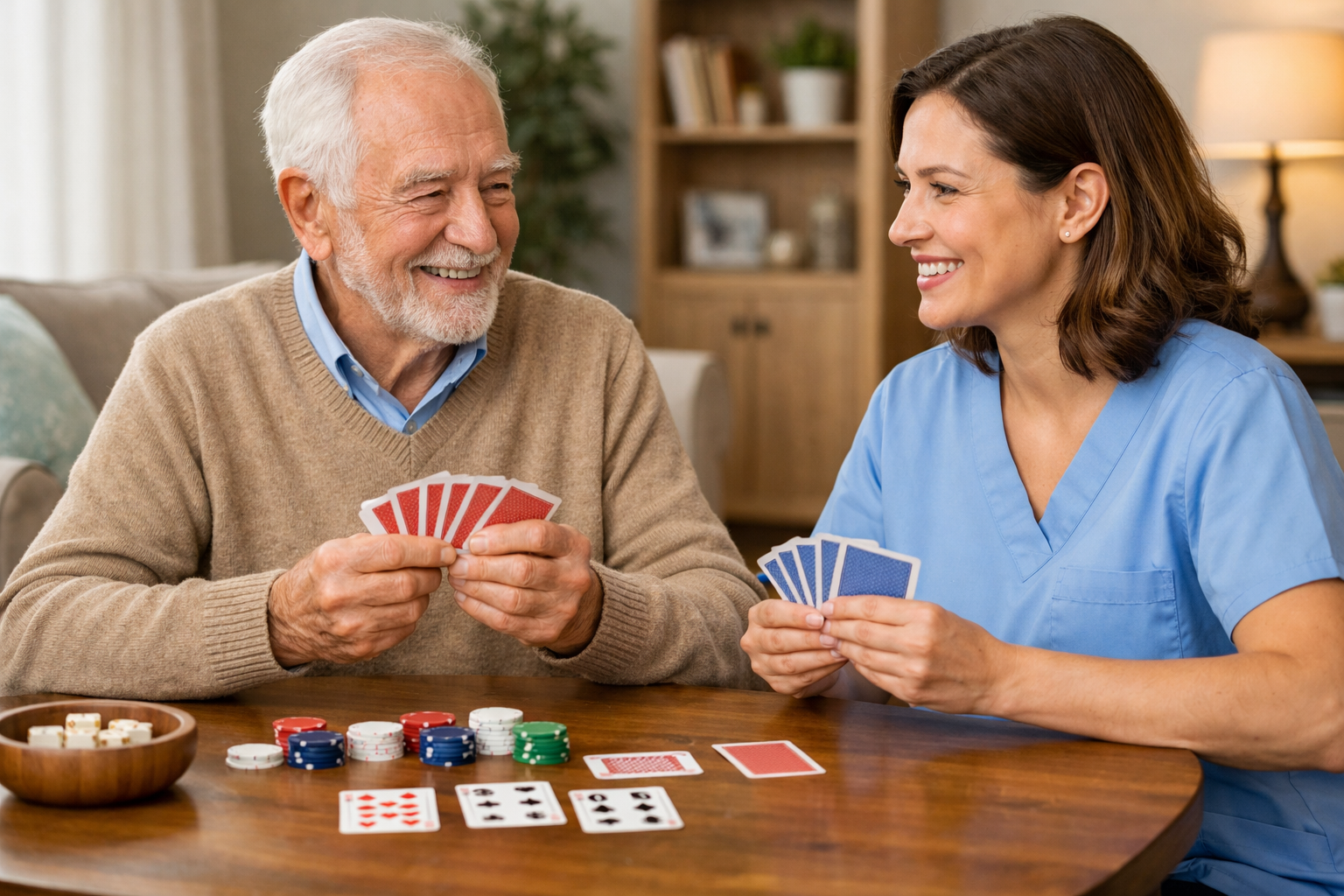
Even 15–20 minutes a day can help strengthen neural connections. Caregivers can assist by choosing age-appropriate puzzles and offering encouragement without taking over. These games are not only beneficial for brain health but also provide a sense of accomplishment and enjoyment.
Physical Movement with Mental Focus
Physical activity plays a crucial role in brain health by increasing blood flow and oxygen to the brain. Gentle exercises such as stretching, chair yoga, walking, or light dancing help improve coordination, balance, and mental clarity.
Adding mental focus to movement—such as counting steps, following guided exercises, or practicing simple routines—boosts cognitive engagement. Elderra Home Care caregivers often incorporate safe, supervised movement into daily routines to support both physical and mental wellness.
Learning Something New
Learning doesn’t stop with age. In fact, acquiring new skills helps create new neural pathways in the brain. Seniors can try learning a new language, musical instrument, craft, recipe, or technology skill like using a smartphone or tablet.
These activities challenge the brain, improve memory, and build confidence. Caregivers play a key role in breaking lessons into manageable steps, ensuring learning remains enjoyable and stress-free.
Social Interaction and Meaningful Conversations
Human connection is vital for cognitive and emotional health. Regular social interaction helps reduce loneliness, depression, and cognitive decline. Conversations stimulate attention, reasoning, and memory while providing emotional comfort.
For seniors living alone, companionship care makes a significant difference. Elderra Home Care caregivers provide friendly interaction, active listening, and meaningful engagement that keeps seniors mentally stimulated and emotionally supported every day.
Creative Activities and Hobbies
Creative expression activates multiple areas of the brain. Activities such as painting, drawing, knitting, gardening, writing, or listening to and playing music enhance creativity and emotional processing.
Music, in particular, has been shown to trigger memory recall and improve mood in seniors, including those with dementia. Encouraging creative hobbies helps seniors stay mentally active while experiencing joy and relaxation.
Establishing Daily Routines and Mental Organization
Structure and routine are powerful tools for cognitive health. Having a predictable daily schedule reduces stress, improves focus, and supports memory. Simple tasks such as organizing photos, planning meals, journaling, or maintaining a calendar help keep the mind sharp.
Professional caregivers from Elderra Home Care assist seniors in maintaining daily routines, offering gentle reminders and guidance that promote independence and mental clarity.
The Role of Caregivers in Brain Health Support
While these activities are beneficial, consistency is key. Seniors often need encouragement, structure, and companionship to maintain daily cognitive habits. Trained caregivers provide the motivation and assistance needed to turn simple activities into lasting routines.
At Elderra Home Care, caregivers personalize brain-boosting activities based on each senior’s abilities, interests, and health conditions. Whether it’s engaging in conversation, assisting with puzzles, or supporting creative hobbies, our caregivers ensure mental stimulation remains enjoyable and safe.
Why Brain Health Matters as We Age
Cognitive decline is not an inevitable part of aging. With regular mental stimulation, seniors can maintain memory, independence, and confidence for longer. Brain-boosting activities help:
Improve memory and focus
Slow cognitive decline
Enhance mood and emotional well-being
Support independence
Reduce the risk of depression and isolation
Elderra Home Care is committed to enhancing the quality of life for seniors through compassionate, personalized in-home care. Our services focus on physical assistance, emotional support, companionship, and cognitive engagement—helping seniors thrive in the comfort of their own homes.

elderrahomecare@gmail.com